
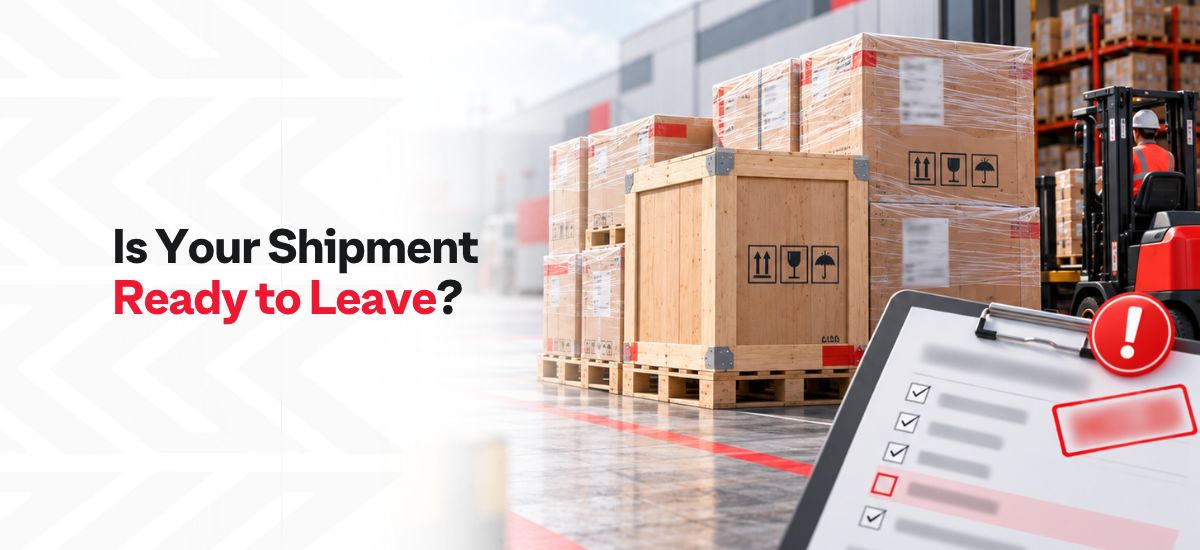
The Shipment That Looked Ready
The export order is packed. A truck is waiting at the loading bay, and everyone expects the cargo to leave on schedule. Then someone spots a gap in the paperwork. One document is incomplete, and the planned departure is suddenly out of reach. For the manufacturer, the problem shows up at the last minute, but it started much earlier.
A packed shipment is not always a ready shipment.
Where the Delay Really Began
Packaging, documentation and transport were each running on their own timeline. The cargo was ready, but the steps needed to move it were not aligned. So the logistics manager starts calling the packaging vendor, the transporter, the customs agent and the shipping partner. Each one holds part of the answer, and the manufacturer is left putting the pieces together while the departure window gets closer.
Most delays at the port begin back at the factory.
Plan the Journey Before the Cargo Moves
Freight forwarding starts with decisions made before the truck arrives. These choices shape the schedule, cost and reliability of the movement, so settle them early:
- Documents: confirm what the shipment needs at the order stage, not on dispatch day.
- Packaging: fix a completion date against the target departure, with a buffer.
- Departure: pick the sailing or flight the cargo can realistically meet.
- Mode and load: decide sea or air, and FCL or LCL, before booking.
- Coordination: let one partner own the plan so you are not chasing four vendors.
Decide early, and the shipment moves on your schedule.
How KGC Helps
KGC brings freight forwarding, customs support, documentation, packaging and transport coordination together. Every stage is planned around the same departure, so you get a clear view of what is ready and what still needs attention.
Before your next shipment leaves the factory, make sure the complete journey is planned. Talk to KGC about planning and coordinating its movement.