
Warehousing Gives Control
Warehousing plays an important role in keeping inventory under control.
It makes sure material is received, stored, identified and made available when needed. A well-managed warehouse gives clarity on what stock is available, where it is kept and how it should move. But warehousing alone does not complete the job.
If the material stays inside the warehouse, production still cannot use it. The next step is equally important. The material must move from storage to the point of use.
That is where in-plant logistics begins.
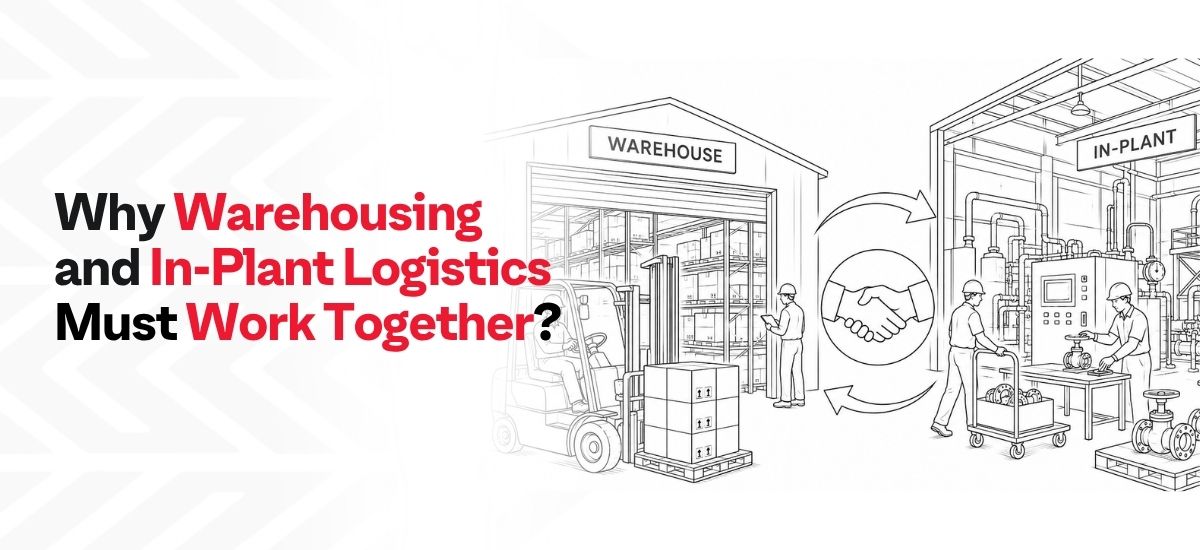
Warehousing creates availability. In-plant logistics creates usability.
In-Plant Logistics Keeps Production Moving
In-plant logistics is about moving material inside the plant with discipline.
It ensures that the right material reaches the right station, in the right quantity, at the right time. This movement may look simple from outside. But inside a running plant, it directly affects production flow.
If material movement is delayed, the line slows down. If the wrong material reaches the line, rework starts. If the quantity is not correct, the team has to stop and check again.
Every small gap affects production output.
In-plant logistics is the link between inventory and production.
One Flow, Better Performance
When warehousing and in-plant logistics work together, material movement becomes smoother.
The warehouse supports stock control. In-plant logistics supports shop-floor movement. Together, they make sure that material is available, traceable and delivered to the right place on time.
This helps production teams work with fewer interruptions. It reduces unnecessary follow-ups. It improves planning. It protects output.
For growing businesses, this coordination is not optional. It is necessary for stable and efficient operations.
Smooth production needs both stock control and shop-floor movement working together.
The real question is not only, “Do we have the material?”
The better question is, “Is the material reaching production when and where it is needed?”
Warehouse and in-plant logistics must be perfectly coordinated for smooth production without disruption, because when both works as one, production moves with better control, better speed and better confidence.
When warehousing and in-plant logistics work together, production moves without interruption.